

.svg)

October 2, 2026
Nassau County Speeding Ticket in School Zones and Residential AreasA speeding ticket Nassau County drivers receive in a school zone or residential area can involve more than an ordinary traffic fine.
Receiving a speeding ticket Suffolk County drivers may face on the Long Island Expressway can raise questions about points, fines, insurance, and what happens next. The Long Island Expressway, also known as the LIE or Interstate 495, runs through Suffolk County and carries substantial daily traffic. A speeding allegation on this roadway is still handled under New York's traffic laws, and the consequences can depend on how far above the posted speed limit the driver was allegedly traveling, the specific charge, and what happens in court.
A speeding ticket is an allegation of a traffic violation, not automatically a conviction. Drivers generally have the opportunity to respond to the charge and, where appropriate, contest the allegation through the applicable court process. Understanding the charge, the potential point consequences, and the court listed on the ticket can help a driver make informed decisions about how to proceed.
The Long Island Expressway is I-495, a major east-west highway crossing Long Island. Much of the LIE has historically had a posted speed limit of 55 mph, although drivers should always follow the speed limit displayed on signs at the specific location where they are driving.
This distinction matters because speeding is measured against the applicable posted limit. The relevant limit may also be temporarily reduced because of construction, work zones, traffic conditions, or other roadway circumstances.
New York State Department of Transportation materials have identified a 55 mph regulatory speed limit for the Long Island Expressway, while separate portions of the roadway, including service roads, can have different posted limits.
For that reason, a driver should not assume that the speed limit on the main LIE is the same as the limit on a service road, ramp, or another nearby roadway.
A Long Island Expressway speeding ticket generally identifies the alleged speed, the applicable speed limit, and the legal violation charged.
For example, a ticket may allege that a driver was traveling a certain number of miles per hour above the posted limit. The difference between the alleged speed and the applicable limit is important because New York's point schedule increases as the alleged speed over the limit increases.
The circumstances surrounding the traffic stop can also matter. Depending on the facts, a driver may have questions concerning the officer's observations, the alleged speed, the location of the violation, the applicable speed limit, or the evidence supporting the charge.
These issues are fact-specific. A driver should review the actual ticket and the circumstances of the stop rather than assuming that every speeding case will be handled the same way.
One of the most important concerns after receiving a speeding ticket is the potential effect on a driver's New York driving record.
Under the New York DMV point system, speeding convictions carry the following point values:
Speed Over Posted Limit
DMV Points
1–10 mph
3 points
11–20 mph
4 points
21–30 mph
6 points
31–40 mph
8 points
More than 40 mph
11 points
These point values are published by the New York DMV.
This means that the difference between the alleged speed and the posted limit can have a significant effect on the driver's record.
For example, an allegation of traveling 10 mph over the limit falls into a different point category than an allegation of traveling 25 mph over the limit. A driver should therefore pay attention to the exact speed alleged on the ticket rather than simply treating it as a generic speeding offense.
Receiving a ticket does not by itself mean that points have already been added to the driver's record.
Points are associated with a conviction. The New York DMV explains that its point system is used to identify drivers who accumulate multiple traffic convictions within a specified period.
This distinction is important because a driver who receives a ticket still has to deal with the underlying charge before assuming what the ultimate effect on the driving record will be.
A driver concerned about Suffolk County speeding ticket points should consider the ticket in the context of the driver's existing record.
For example, a driver who has no recent convictions may face a different overall record impact from a driver who already has several points. New York's point system can become particularly important when multiple convictions occur within the applicable period.
The DMV states that accumulating 11 or more points within the applicable 24-month period can result in a suspension or revocation process.
Because the consequences can depend on the driver's individual record, it is important to look at the specific convictions and dates rather than considering a new ticket in isolation.
The ticket should contain information telling the driver how and where to respond.
A Suffolk County LIE traffic ticket may fall within the traffic court system applicable to the location and nature of the alleged violation. Suffolk County's court system includes the Suffolk County Traffic and Parking Violations Agency for certain traffic and parking matters, while Suffolk County District Court also handles traffic matters.
The court or agency identified on the ticket is therefore important.
Drivers should carefully review:
Missing a required appearance or failing to respond according to the ticket's instructions can create additional legal problems. Suffolk County court information also explains that certain adjournment requests cannot simply be made by telephone.
A driver may have the right to contest a speeding charge rather than simply accepting the allegation.
Whether contesting the ticket is appropriate depends on the facts and evidence in the individual case. Potential issues may include the accuracy and sufficiency of the evidence, the circumstances of the traffic stop, identification of the vehicle, the applicable speed limit, or other procedural and factual questions.
The burden in a traffic case is on the prosecution to establish the charged violation according to the applicable legal standard. A driver does not have to assume that the allegation on the ticket automatically establishes guilt.
Recent Suffolk County litigation illustrates that speeding cases can proceed through the court system and, in appropriate circumstances, reach appellate review. In a July 2026 decision, the Appellate Term, Second Department considered an appeal involving a speeding conviction from the Suffolk County Traffic and Parking Violations Agency.
That does not mean every ticket should be appealed or contested. The appropriate response depends on the individual circumstances.
The location listed on a speeding ticket can be important because the applicable court, speed limit, roadway conditions, and other circumstances may depend on where the alleged violation occurred.
The LIE passes through multiple communities in Suffolk County. A ticket issued on the mainline may involve different circumstances from one issued on a service road or connecting roadway.
For example, NYSDOT documents identify portions of the LIE service-road system with posted limits that differ from the mainline.
Drivers should therefore avoid relying solely on a general understanding of the LIE speed limit. The actual location and posted signs relevant to the alleged violation matter.
Another concern after a speeding conviction is automobile insurance.
A conviction can become part of a driver's driving history, and insurers may consider driving records when determining premiums or eligibility. The exact effect varies based on the insurer, the driver's history, the type of violation, and other factors.
There is no single insurance increase that applies to every speeding ticket Suffolk County case.
Drivers should also distinguish between the court consequences of a ticket and the separate consequences that may arise through the DMV or an insurance company. A court disposition, DMV record, and insurance underwriting decision are related but are not the same process.
After receiving a ticket on the Long Island Expressway, a driver should take several practical steps.
Check the alleged speed, posted speed limit, location, violation charged, and response instructions.
The ticket should identify what the driver must do and when. Failing to respond can create additional consequences.
If points are a concern, understanding the driver's existing record can help put the potential consequences of a new conviction into context.
If there are documents, photographs, dash-camera footage, witness information, or other material relating to the circumstances of the stop, preserve them rather than deleting or discarding them.
Depending on the charge and circumstances, a driver may choose to handle the matter personally or seek legal representation. An attorney can review the ticket, explain the applicable process, and identify the factual and procedural issues relevant to the case.
A speeding charge on the Long Island Expressway should not be treated as simply a matter of paying a fine without first understanding the charge and its possible consequences.
The alleged speed, posted limit, location, court instructions, existing driving record, and evidence can all be relevant. The potential consequences can also extend beyond the immediate ticket, particularly when a conviction adds points to a driver's record.
If you received a speeding ticket Suffolk County and want to understand your options, reviewing the specific ticket and circumstances can help determine the appropriate next step.
If you received a speeding ticket on the Long Island Expressway or another roadway in Suffolk County, a traffic ticket attorney in Suffolk County can review the charge, explain the applicable court process, and discuss the legal options available based on the facts of your case.
To learn more about traffic ticket representation in Suffolk County, visit the Suffolk County Traffic Ticket Defense service page.
A speeding ticket on the Long Island Expressway can have consequences beyond the initial fine, particularly if a conviction results in points on your New York driving record. The alleged speed, posted speed limit, location of the violation, and your existing driving history can all affect what happens next.
If you receive a speeding ticket Suffolk County on the LIE, review the ticket carefully, follow the required court instructions, and understand your options before deciding how to respond. When the charge could affect your driving record, insurance, or license, a Suffolk County traffic ticket attorney can review the specific circumstances and explain the legal process that applies to your case.
The number of points depends on how far above the posted speed limit the driver is alleged to have been traveling. Under the New York DMV schedule, speeding 1–10 mph over the limit carries 3 points, 11–20 mph carries 4 points, 21–30 mph carries 6 points, 31–40 mph carries 8 points, and more than 40 mph carries 11 points upon conviction.
The ticket should provide instructions explaining where and how to respond. Depending on the nature and location of the violation, the matter may be handled through the applicable Suffolk County traffic court or Traffic and Parking Violations Agency.
No. Receiving the ticket itself does not automatically mean that points have been added. Points are associated with a conviction under New York's DMV point system.
A driver may have the opportunity to contest a speeding charge. Whether there is a viable defense depends on the facts, evidence, charge, and applicable procedure. A review of the actual ticket and circumstances is necessary before determining what issues may be raised.
A speeding conviction can add points to a driver's record. The number of points depends on the alleged speed over the posted limit. Multiple convictions can have cumulative consequences, and the DMV states that 11 or more points within the applicable 24-month period can result in a suspension or revocation process.
October 2, 2026
Nassau County Speeding Ticket in School Zones and Residential AreasA speeding ticket Nassau County drivers receive in a school zone or residential area can involve more than an ordinary traffic fine.
October 2, 2026
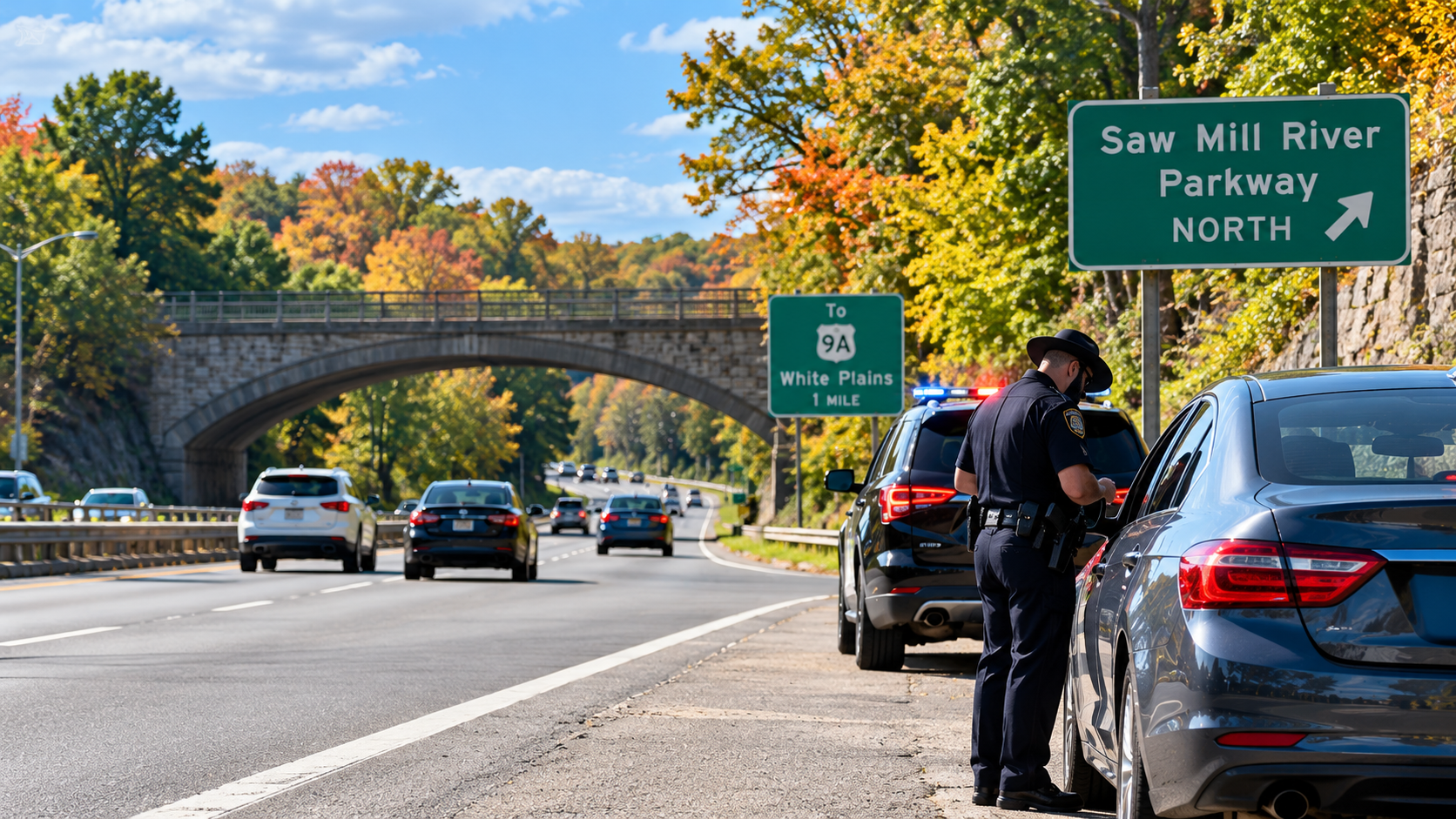
Westchester County Speeding Ticket on Major Parkways and Arterial RoadsA speeding ticket in Westchester County can result in points, fines, and potential insurance consequences, depending on the alleged violation and how the case is resolved.

September 25, 2026
Suffolk County Speeding Ticket on the Long Island Expressway: What Drivers Should KnowA speeding ticket on the Long Island Expressway in Suffolk County can lead to fines, points on your driving record, and potential insurance consequences.

August 24, 2026
Teen Drivers and Junior License Tickets in Suffolk County: What Parents Should KnowParents should understand how junior license restrictions and traffic violations can affect teen drivers, driving privileges, and insurance in Suffolk County.
.jpg)
August 21, 2026
Winter Weather Driving Violations in Westchester: Skidding, Black Ice, and Fault DisputesWinter conditions such as black ice, snow, and slippery roads can lead to skidding, traffic tickets, and disputes over fault after a Westchester County collision.

August 19, 2026
Illegal U-Turns, Unsafe Lane Changes, and Other "Minor" Moving Violations in Nassau CountyIllegal U-turns, unsafe lane changes, and other seemingly minor moving violations in Nassau County can still result in fines, points, insurance consequences, or other penalties, making it important to understand your rights and options after receiving a ticket.