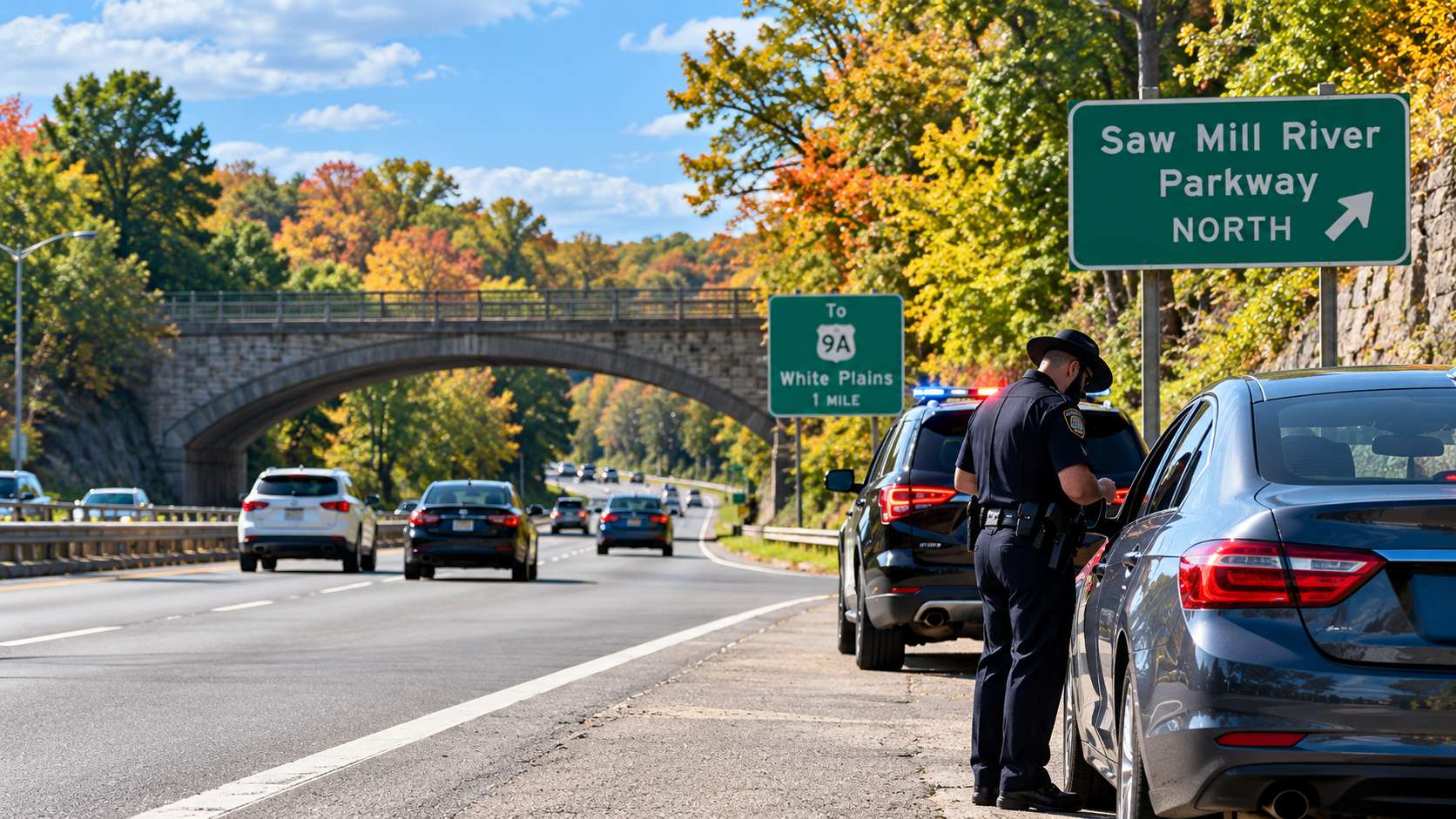
Receiving a traffic ticket Suffolk County drivers may face for failure to yield can raise concerns about fines, points on a New York driving record, insurance, and court procedures. Failure-to-yield violations can occur at intersections, stop signs, yield signs, when turning left across oncoming traffic, or when a driver is required to yield to a pedestrian. The consequences depend on the specific violation cited and the circumstances of the incident.
New York's Vehicle and Traffic Law establishes different right-of-way requirements for different driving situations. A ticket is an allegation, not automatically a conviction. Understanding the statute listed on the citation, the potential penalties, and the process for responding can help drivers make informed decisions about their next steps.
Key Takeaways
- Many common failure-to-yield violations carry 3 points upon conviction under New York's DMV point system, although the precise charge should be verified.
- Fines and other consequences depend on the violation cited, the circumstances of the incident, and the court's disposition.
- Drivers who receive a failure to yield ticket Suffolk County should review the citation, follow the response instructions, and understand their legal options before deciding how to proceed.
What Is a Failure-to-Yield Violation in New York?
Failure to yield generally means that a driver did not give another road user the right of way when required by law. The applicable rule depends on the location, traffic controls, and movements of the vehicles or pedestrians involved.
New York Vehicle and Traffic Law contains several provisions addressing right-of-way violations. For example, § 1140 addresses vehicles approaching or entering intersections, § 1141 addresses left turns in the presence of approaching traffic, and § 1142 covers intersections controlled by stop or yield signs.
The exact statute matters because not every failure-to-yield ticket involves the same conduct or legal requirements.
Drivers can review the New York Vehicle and Traffic Law, Article 26 for the applicable right-of-way provisions.
Common Types of Failure-to-Yield Tickets in Suffolk County
Failure to Yield at an Intersection
Under VTL § 1140, drivers approaching an intersection must follow the applicable right-of-way rules. When vehicles enter an intersection from different highways at approximately the same time, the driver on the left generally must yield to the vehicle on the right, subject to the statute's qualifications and other controlling traffic rules.
A ticket may be issued when an officer believes a driver entered an intersection without yielding as required.
Failure to Yield at a Stop or Yield Sign
VTL § 1142 addresses stop- and yield-controlled intersections. Drivers must comply with the applicable stopping requirements and yield as required before proceeding.
A Suffolk County yield ticket may arise when an officer alleges that a driver failed to comply with a yield sign or did not give the right of way to traffic that was entitled to proceed.
Failure to Yield While Turning Left
Under VTL § 1141, a driver intending to turn left must yield to approaching traffic that is within the intersection or so close as to constitute an immediate hazard. The driver may proceed when it is safe and lawful to do so.
The circumstances surrounding the approaching vehicle, visibility, and timing of the turn may be relevant when evaluating the allegation.
Failure to Yield to Pedestrians
Drivers also have legal obligations concerning pedestrians. New York law addresses yielding to pedestrians in crosswalks and requires drivers to exercise due care to avoid collisions.
A pedestrian-related allegation may involve different legal provisions from a general intersection violation. The exact charge should therefore be reviewed rather than assuming every failure-to-yield case is identical.
How Many Points Does a Failure-to-Yield Ticket Carry?
One of the main concerns after receiving a Suffolk failure to yield violation is the potential effect on a driver's New York driving record.
Suffolk County's Traffic and Parking Violations Agency publishes a point chart for moving violations handled by the agency. Its chart places violations under VTL §§ 1140–1146-a in the 3-point category. The New York State DMV administers the point system and records points associated with qualifying convictions.
The precise point assessment depends on the violation of conviction. Drivers should confirm the statute and charge on their citation rather than relying solely on the general description of the offense.
Why Existing Points Matter
A new traffic conviction may have greater consequences for someone who already has points from previous violations.
New York's DMV considers points accumulated within the applicable period when determining whether a driver may face suspension or revocation proceedings. A driver should therefore consider the overall driving record rather than looking at a new ticket in isolation.
Receiving a ticket does not automatically mean that the driver has been convicted or that points have already been added to the record.
What Are the Potential Fines and Penalties?
The financial consequences of a failure-to-yield ticket depend on the specific charge and the court's disposition. A fine and applicable surcharges may apply, but there is no single fine that covers every failure-to-yield violation.
A case involving an intersection may fall under a different statutory provision from one involving a stop sign, yield sign, or pedestrian. Additional allegations or circumstances involving a collision or injuries can also affect the legal issues involved.
For this reason, drivers should review the statute and charge code printed on the ticket rather than relying on a generic online estimate of the fine.
A conviction may also affect a driver's record and could influence how an insurer evaluates the driver's history. The impact varies by insurer, policy, driving record, and the nature of the violation.
How Is a Failure-to-Yield Ticket Handled in Suffolk County?
The court or agency identified on the ticket determines the applicable response process. The Suffolk County Traffic and Parking Violations Agency handles certain moving violations in the five western towns of Suffolk County. Other matters may be handled by a different court depending on the location and nature of the charge.
The agency provides instructions for responding to eligible tickets, including entering a plea and attending a conference or hearing when required. Procedures and deadlines can depend on the citation and the available response options.
Before responding, review:
- The exact violation and Vehicle and Traffic Law section cited
- The date, time, and location of the alleged violation
- The court or agency named on the ticket
- The deadline and instructions for entering a plea
- Any additional violations listed on the citation
The agency warns that failing to respond within the allowed time can lead to a default conviction and license suspension. Visit the Suffolk County Traffic and Parking Violations Agency for official instructions.
Can You Contest a Failure-to-Yield Ticket?
A driver may have the opportunity to contest a failure-to-yield allegation. Whether a particular case presents a viable defense depends on the statute cited, the evidence, and the circumstances of the incident.
Relevant issues may include the positions and movements of the vehicles, traffic signs or signals, visibility, witness accounts, and whether the alleged conduct violated the applicable right-of-way rule.
For example, a driver accused of failing to yield while turning left may need to examine whether approaching traffic presented an immediate hazard under the applicable law. A stop-sign case may raise different factual questions.
A traffic ticket attorney can review the citation and available evidence to identify relevant legal or factual issues. No particular defense guarantees dismissal, and the appropriate approach depends on the individual case.
What Should You Do After Receiving a Failure-to-Yield Ticket?
Start by reading the citation carefully. Identify the statute, the alleged conduct, and the deadline for responding. Do not assume every ticket can be resolved by paying a fine online.
Preserve potentially relevant information, including photographs, dash-camera footage, witness details, and other documentation concerning the intersection or circumstances of the incident.
If the ticket could add points to your driving record, or if the incident involved a collision or additional alleged violations, consider obtaining legal advice before deciding how to proceed.
A traffic ticket attorney can explain the applicable process and discuss the options available based on the facts of the case.
The Bottom Line
A traffic ticket Suffolk County drivers receive for failure to yield can result in fines and points on a New York driving record. The consequences depend on the specific statute cited, the circumstances of the alleged violation, and the final outcome of the case.
Many common failure-to-yield violations carry 3 points upon conviction, but drivers should verify the exact charge against the current DMV point schedule. Reviewing the citation, following the response instructions, and understanding the applicable right-of-way law are important steps before deciding how to handle the ticket.
Speak With a Suffolk County Traffic Ticket Attorney
If you received a failure-to-yield ticket in Suffolk County, a traffic ticket attorney in Suffolk County can review the citation, explain the potential points and penalties, and discuss the legal options available based on the circumstances of your case.
Learn more about traffic-ticket representation on the Suffolk County Traffic Ticket service page.
Frequently Asked Questions
How many points is a failure-to-yield ticket in Suffolk County?
Many common failure-to-yield violations under VTL §§ 1140–1146-a carry 3 points according to Suffolk County's published point chart. The exact charge should be checked against the current schedule.
How much is a failure-to-yield ticket in Suffolk County?
The amount depends on the specific violation, applicable fine schedule, and court disposition. Additional surcharges may apply, so there is no single amount for every failure-to-yield ticket.
Can I fight a failure-to-yield ticket in Suffolk County?
You may have the opportunity to contest the charge. Whether a defense is available depends on the specific statute, evidence, roadway circumstances, and applicable procedure.
Will a failure-to-yield ticket affect my insurance?
A conviction may affect how an insurer evaluates your driving record, but the impact varies by insurer, policy, driving history, and violation. No specific premium increase applies to every case.
What happens if I ignore a Suffolk County failure-to-yield ticket?
Failing to respond by the required deadline can lead to a default conviction and possible license suspension. Follow the instructions on the ticket and contact the listed court or agency if you need clarification.